


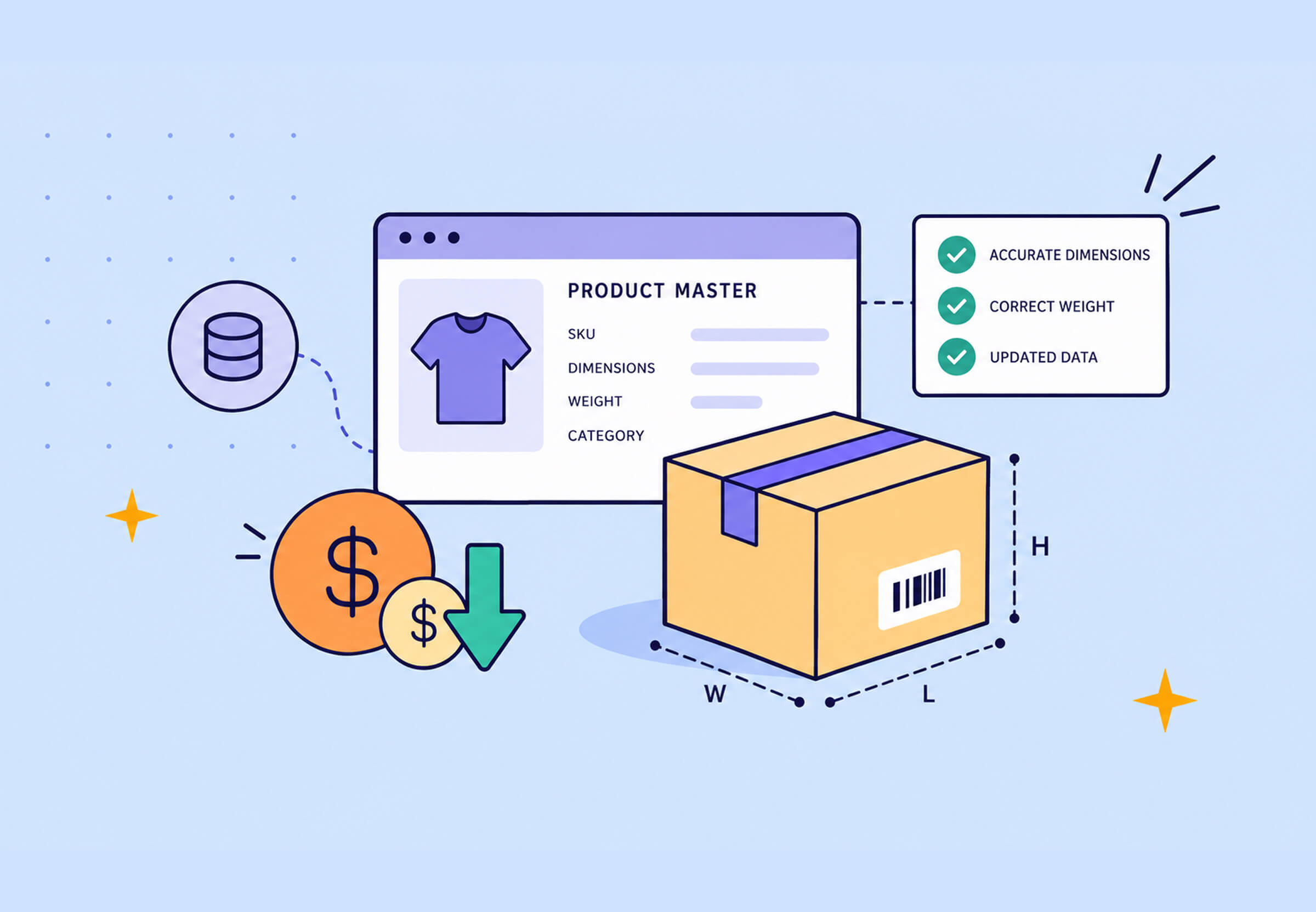
Every parcel invoice, fulfillment fee, and carrier rate comes down to one thing: the physical attributes of the product being shipped. The system of record for those attributes is the product master. Most teams treat it as a static setup file, created once during onboarding and rarely revisited. Implentio reconciles millions of parcel and fulfillment charges across e-commerce brands, and here's what we see as the common thread: an outdated or inaccurate product master is one of the biggest, and most fixable, sources of hidden shipping and fulfillment costs.
What Is a Product Master, Really?
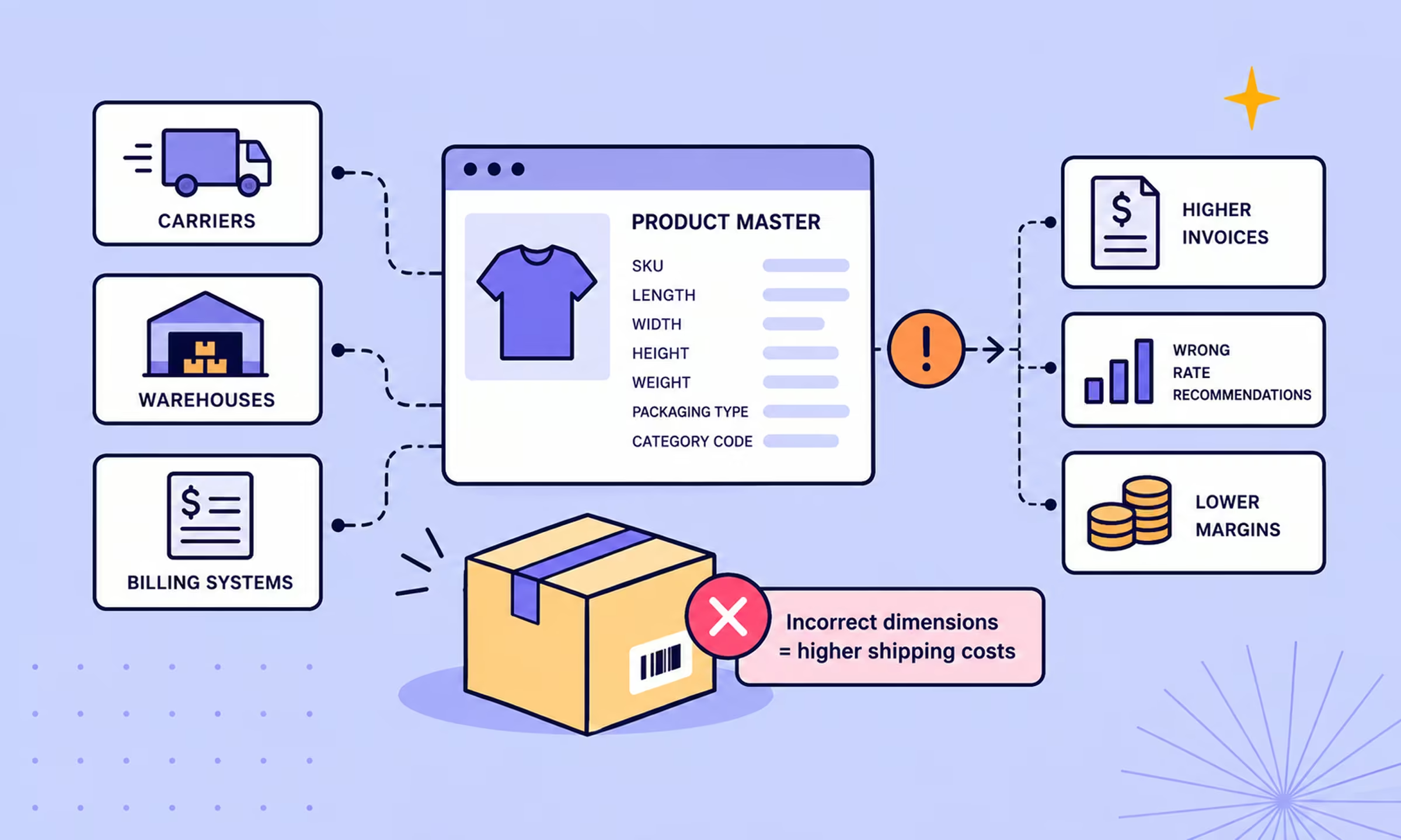
A product master is the reference table that maps every SKU to the data that carriers, warehouses, and billing systems use to calculate cost. That means length, width, height, weight, packaging type, and often cost tiers or category codes. It sits at the intersection of merchandising, fulfillment, and finance. Therein lies the problem: none of them usually owns the product master, which is exactly why it drifts out of date.
Carriers often bill on dimensional weight. Fulfillment centers can bill on pick-and-pack tiers keyed to size and weight bands. Rate engines often choose the "least cost carrier" based on the dimensions and weight they're given. If those inputs are wrong, everything downstream is wrong too: the invoice you pay, the rate shopping engine's recommendation, and the margin on the order. Even when each system works correctly, the input it receives is incorrect.
Why Accuracy Breaks Down Over Time
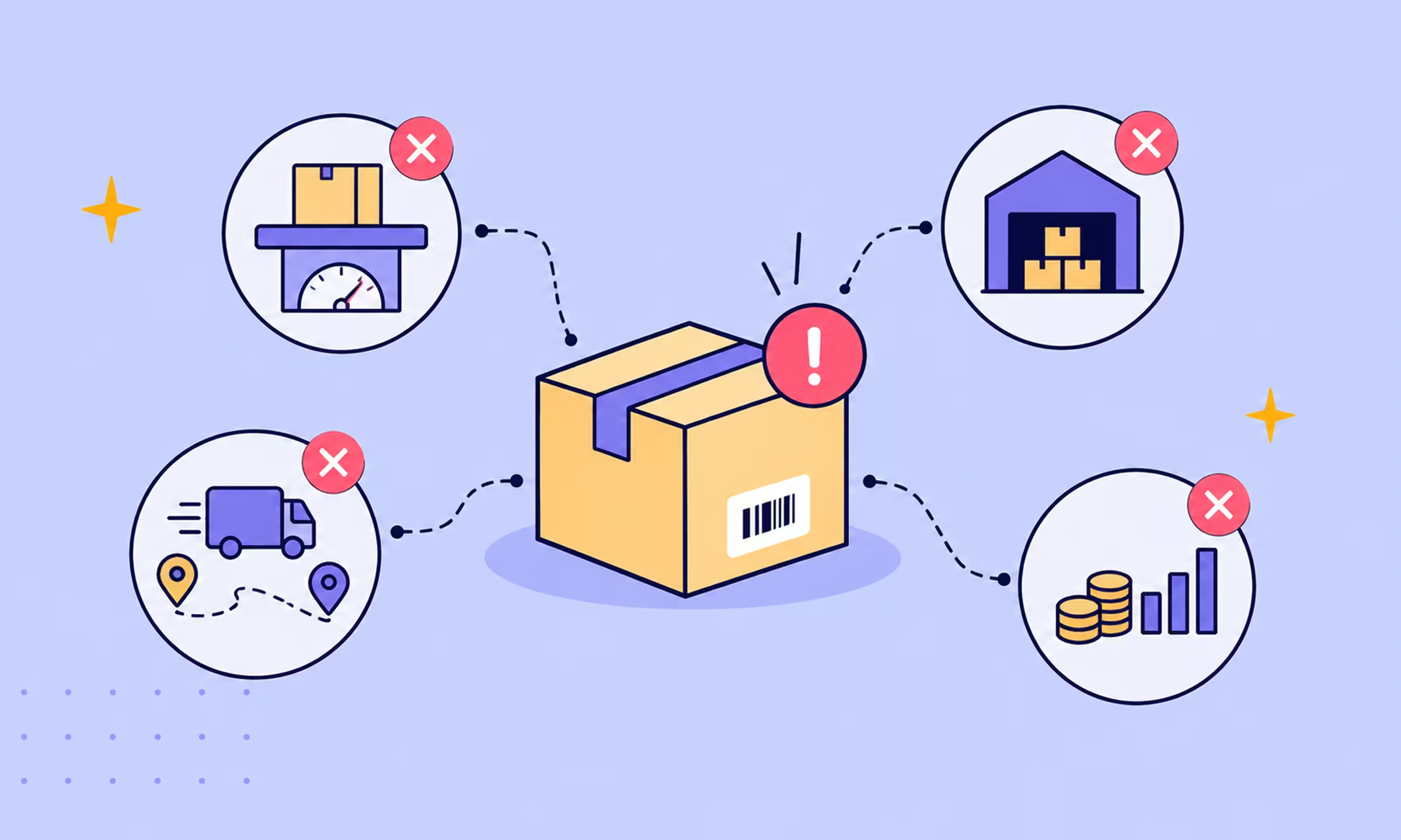
- Catalog velocity: New SKUs launch faster than data governance can keep up. New products, bundles, and packaging changes are added to the catalog without corresponding dimension and weight capture.
- Packaging changes: A supplier or packaging switch might change a box size by half an inch, but no one updates the master.
- Estimates become permanent: Estimated or "placeholder" dimensions entered at launch are rarely replaced with actual measured values.
- Fragmented ownership: Product data lives in the ERP, the 3PL's WMS, and the storefront platform simultaneously, with no single source of truth reconciling the three.
The Cost of an Outdated Product Master
The impact shows up as an actual, recurring cost. It's almost always invisible in a standard invoice review, because each individual overcharge looks reasonable on its own.
- Carrier overcharges: Gravitational weight or dimensional weight (DIM) overbilling when a carrier's measured billed weight exceeds what your master file assumes, resulting in disputed or unrecoverable charges.
- Fulfillment fee creep: Fulfillment tier misclassification, where a product is billed at a larger pick-and-pack tier than its true footprint requires.
- Suboptimal routing: A least-cost-carrier engine routing packages based on stale weights or dimensions selects a carrier that is no longer the cheapest option for that order’s real profile.
- Distorted unit economics: Margin calculations and free-shipping thresholds built on inaccurate weight and dimension assumptions understate true fulfillment cost per order.
Keeping the Product Master Current: Best Practices
- Single ownership: Assign one team or role as the accountable owner of the product master, even if data originates elsewhere.
- Measure at launch: Require actual measured (not estimated) dimensions and weight before a new SKU goes live, and re-measure after any packaging changes.
- Reconcile on a cadence: Run a recurring reconciliation between your product master and the dimensions/weights carriers and 3PLs actually bill against, flagging variances above a defined threshold.
- Sync systems, don't duplicate them: Treat the product master as a live feed synced across ERP, WMS, and storefront, rather than three independently maintained spreadsheets.
- Prioritize high-velocity SKUs: Audit high-volume and high-variance SKUs quarterly, since a small share of SKUs typically drives the majority of shipping volume and savings opportunity.
How Implentio Turns Product Master Data Into Savings
Implentio's platform treats the product master as a living input to cost control, not a static reference table:
- Product Weight Validation: Product Weight Validation (PWV) continuously compares your product master against actual carrier-measured weights and dimensions from invoice data, surfacing discrepancies as soon as they appear and quantifying the dollar impact of each one.
- Invoice reconciliation: Our reconciliation engine flags invoices billed against dimensions or weights that don't match your master file, so it identifies disputable overcharges automatically rather than through manual spot-checks.
- Least Cost Carrier routing: Least Cost Carrier (LCC) routing recommendations are only as good as the product data behind them; Implentio recalculates optimal carrier selection as you correct your product master, so savings compound over time. [internal note - we don’t currently do this but should consider it]
- Fulfillment audit: Beyond individual disputes, we aggregate variance patterns across your catalog to show which SKUs, categories, or packaging types drive the most hidden cost. That turns a data hygiene problem into a prioritized savings roadmap.
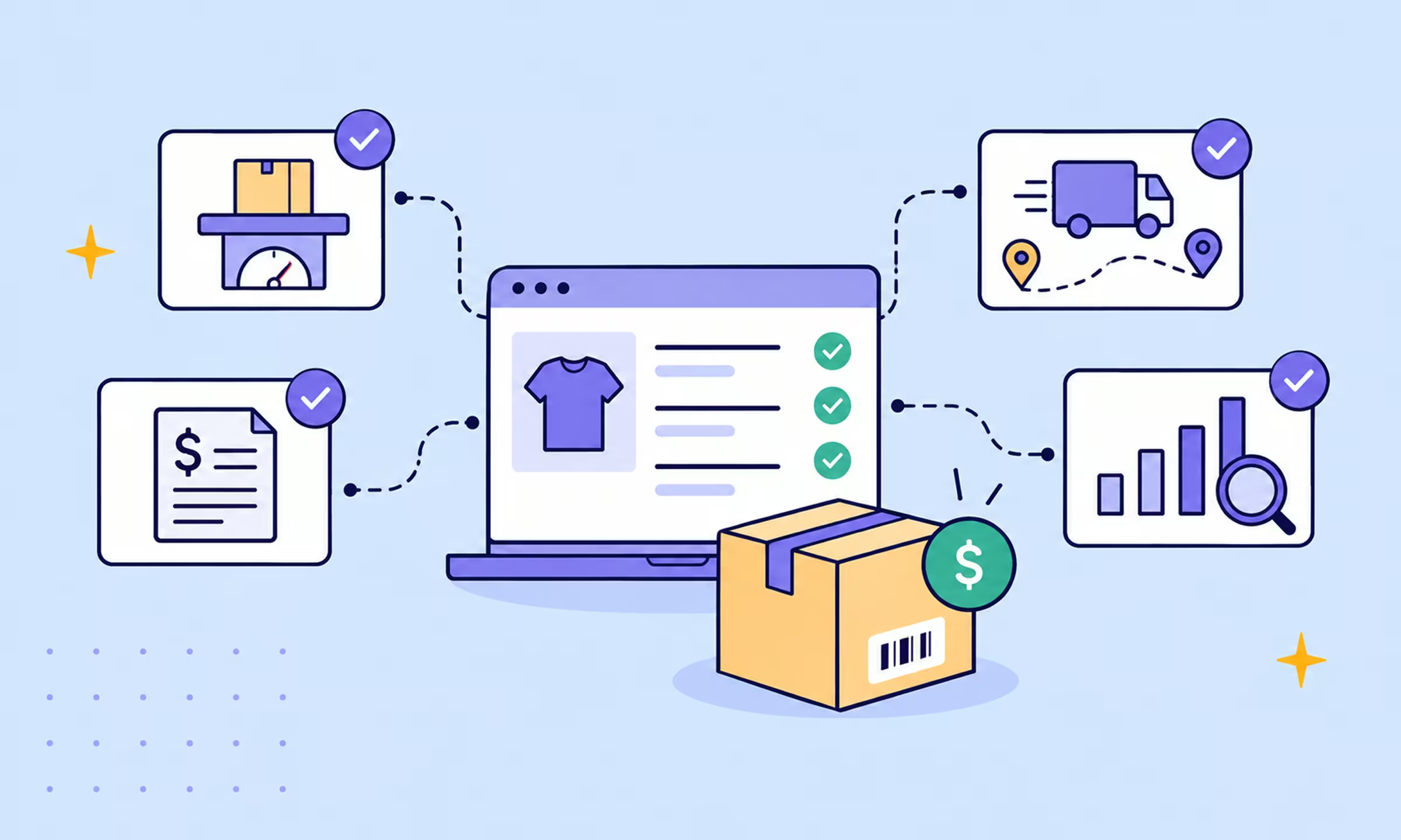
A product master isn't back-office paperwork. It's the pricing input every carrier and fulfillment partner uses to bill you. Brands that treat it as a continuously audited system can consistently uncover cost savings that a standard invoice audit alone would miss. Implentio's reconciliation, PWV, and LCC routing tools are built to make that ongoing accuracy automatic, turning a historically manual data hygiene task into a continuous source of margin recovery.
Want to see what your product master could be costing you?
Strengthen your 3PL partnerships with Implentio
Reach out to your Implentio representative to get started.
See why leading e-commerce companies trust Implentio to unlock visibility into 3PL operations, streamline reconciliations, and improve logistics performance.


We’ve been where you are. And now we’re back to help.
We ran ecommerce brands, trusted our 3PLs, and saw how much we were losing. We built Implentio to stop it.


An AI-powered margin optimization layer for ecommerce.
© 2026 Implentio. All rights reserved.